Published: September 1, 2026
Print as PDF
Draft horses are proof that size matters – but feeding them well isn’t as simple as feeding them more. Percherons, Clydesdales, Shires, and other heavy breeds have large bodies, efficient metabolisms, and in some lines, a higher risk of weight gain and muscle or metabolic conditions.
In this article, we’ll explain proper draft horse feeding, including diet needs, portion sizes, and health considerations every draft horse owner should know.
Find feeds that support your horse’s digestive health.
How is feeding a draft horse different?
Draft horses aren’t just big horses; they actually often have lower calorie needs per pound of body weight than people expect. Many are easy keepers, maintaining or gaining weight on modest feed, so portion control is especially important.
Whether your draft horse is a pasture companion, trail partner, driving horse, or working farm horse, the goal is the same: feed enough to support healthy muscle, joints, digestion, and energy without overloading the diet with starch, sugar, or unnecessary calories.
Understandably, draft horses’ size tends to put more stress on their feet, joints, and muscles. Excess body weight can increase strain and may raise the risk of laminitis or other soundness problems. That’s why a draft horse feeding plan should be built around steady fiber intake, careful calorie management, and regular assessment — not big scoops of grain.
Day to day, feeding a draft horse differently means:
• Weighing hay instead of estimating by flakes.
• Choosing forage before concentrates.
• Using a ration balancer when vitamins and minerals are needed but extra calories aren’t.
• Limiting high-starch grain unless the horse is doing enough work to justify it.
• Monitoring body condition, neck crest, hoof health, and energy level throughout the year.
How much do draft horses eat?
Most horses take in forage at about 1.5% to 2% of body weight on a dry-matter basis, and draft horses are no exception. The difference is scale. A 1,800 lb draft horse may need roughly 27 to 36 pounds of hay or equivalent forage per day, while a 2,000 lb horse may need about 30 to 40 pounds. Horses in heavy work may need more total calories, while overweight or insulin-sensitive horses may need a carefully controlled plan developed with a veterinarian or equine nutritionist.
A simple framework for how much draft horses eat:
1. Maintenance or light work: 1.5% to 2% of body weight in forage daily, with little or no grain.
2. Moderate work: forage first, then add a low-starch concentrate or fortified feed only as needed.
3. Heavy work: increase calories gradually, ideally with higher-quality forage, at sources, or controlled concentrates rather than large grain meals.
4. Overweight or metabolic horses: use weighed hay, slow feeders, tested low-sugar forage, and professional guidance before restricting too aggressively. Remember, always feed by weight, not volume. A “flake” of hay can vary widely, and that variation matters when feeding a horse that may weigh close to a ton. A hanging scale, hay net scale, or farm scale can make your feeding program much more accurate.
Best draft horse foundation? Forage.
High-quality grass hay or well-managed pasture should be the foundation of most draft horse diets. Good choices include Timothy hay, orchardgrass, brome, teff, or mixed grass hays. Rich alfalfa may be appropriate for growing horses, lactating mares, or hard-working individuals, but it can be too calorie-dense for easy keepers.
For healthier forage feeding:
• Test hay when possible, especially for horses with weight, laminitis, or muscle concerns.
• Look for clean, mold-free hay with moderate energy levels.
• Use slow-feed nets to extend eating time and support digestive health.
• Avoid sudden forage changes; transition over 7 to 14 days when possible.
• Provide free-choice salt and constant access to clean water.
What nutrients are important?
Draft horses need the same core nutrients as other horses, but balance matters more than bulk.
Key nutrients include:
• Fiber: The cornerstone of gut health, steady energy, and natural chewing behavior.
• Protein: Needed for muscle maintenance, topline, hoof growth, and repair. Mature horses at maintenance often do well on moderate-protein forage plus a balanced supplement if needed.
• Vitamins and minerals: Copper, zinc, selenium, vitamin E, calcium, phosphorus, and magnesium all play roles in hooves, immune health, muscle function, and metabolism.
• Fat: Useful as a safer calorie source for working horses or horses that should avoid high-starch feeds. Introduce oils, rice bran, fat supplements or high-fat, high-fiber feeds gradually.
• Water and salt: Large horses drink a lot, and hydration supports digestion, temperature regulation, and performance.
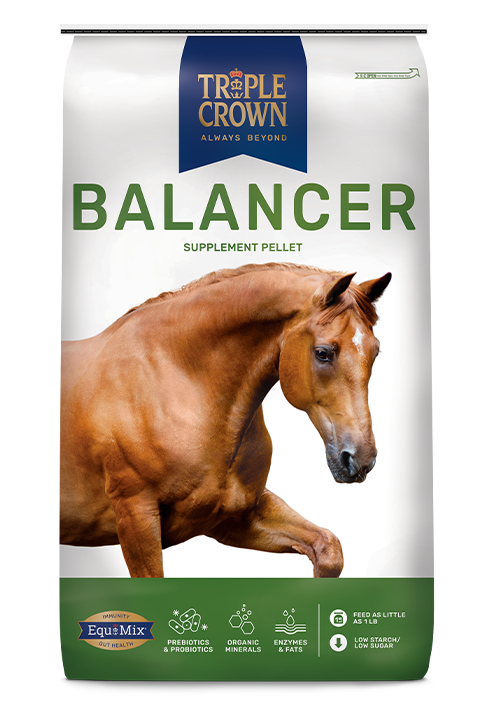
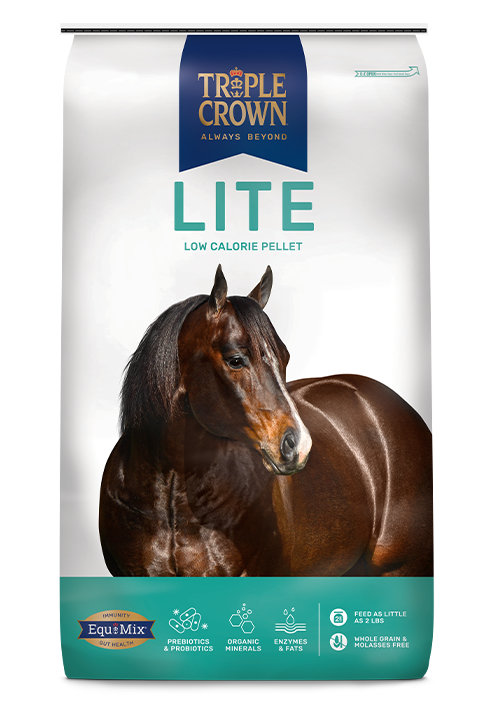
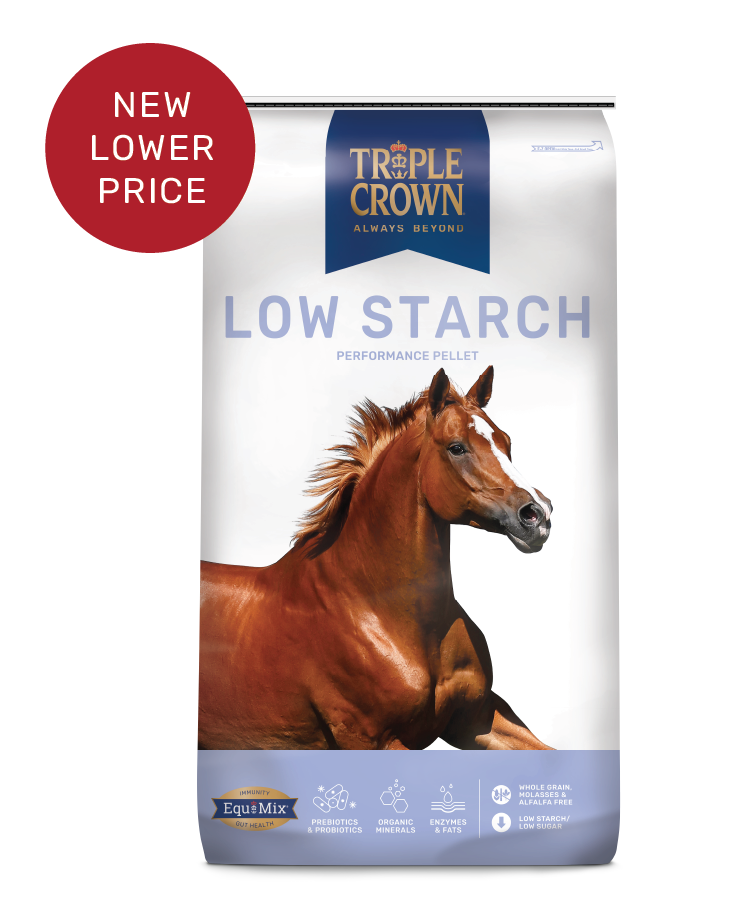
If your hay isn’t meeting mineral needs, a ration balancer is smarter than a high-calorie feed for optimal draft horse nutrition. It supplies concentrated nutrition in a small serving, which is ideal for those that gain weight easily. Triple Crown Balancer is a solid choice for easy-keeping draft horses. Triple Crown Lite can be beneficial for draft horses that need a little more feed volume. For draft horses that need more, check out our Low Starch or Senior horse feed options.
Are draft horses prone to metabolic issues?
Absolutely. Drafts are prone to metabolic and muscle-related issues, especially when generous feeding meets limited exercise. Equine metabolic syndrome is associated with obesity, regional fat deposits such as a cresty neck, insulin dysregulation, and a higher risk of laminitis. Some draft breeds are also associated with polysaccharide storage myopathy, or PSSM, a muscle disorder often managed with regular movement and a low-starch, low-sugar diet.
That doesn’t mean every individual horse needs a special draft horse diet, but it does mean owners should be thoughtful. Watch for weight gain, a firm or cresty neck, recurring hoof soreness, reluctance to work, stiffness after exercise, or unexplained tying-up symptoms. If these show up, call your veterinarian before changing the diet dramatically.
Healthy feeding how-tos
The best draft horse feeding plan isn’t one you set once and forget. Your horse will change with age, workload, season, dental health, pasture growth, and climate. A horse that stays trim on summer pasture might need extra hay in winter. A horse starting driving work might need more calories. A horse recovering from laminitis might need a strict sugar and starch plan.
Use this practical checklist:
• Score body condition every month.
• Weigh hay and feed instead of relying on scoops or flakes.
• Keep forage available for much of the day, using slow feeders if needed.
• Choose low-starch concentrates for horses that need extra calories.
• Introduce any feed change slowly over 7 to 14 days.
• Schedule regular dental care so the horse can chew forage efficiently.
• Work with a veterinarian or nutritionist for horses with laminitis, insulin issues, PSSM, PPID, or unexplained weight changes.
Sample daily approach
For a healthy 1,900 lb draft horse in light work, a reasonable starting point might be 30 to 38 pounds of grass hay per day, divided into several feedings or offered through slow-feed systems. Add a ration balancer if the hay lacks key minerals, and reserve grain or higher calorie feeds for horses that truly need more energy. For horses in heavier work, add calories gradually and reassess body weight, performance, manure quality, and attitude.
Remember, pasture counts too. Spring grass can be rich, and a draft horse may gain weight quickly if turned out on lush pasture without limits. Grazing muzzles, dry lots, track systems, and timed turnout can all help manage intake while still allowing movement.
Keep it simple
In most cases, the healthiest draft horse diet is: good hay or pasture, measured carefully, and balanced nutrients each individual horse actually needs. Remember to change the feeding plan according to body condition and workload – keeping your focus on metabolic health – to help your gentle giants comfortably maintain the size and strength they’re
famous for.
More questions about draft horse nutrition? Our experts can help with product information and more.


 Back to All


 Back to All Topics