Published: June 8, 2026
Print as PDF
You know a good forage should be the bulk of your horse’s diet. But when it comes to their overall health and wellbeing, knowing how to inspect your horse’s forage quality is even more important.
Understanding the actual nutrient content of your hay is critical to ensuring your horse is consuming a balanced diet. Yet the nutritional composition of hay can vary between suppliers, fields and time of harvest. Testing your hay is the only way to truly know the nutrient breakdown of your forage and what you might need to supplement to ensure a balanced diet.
This guide will walk you through practical hay inspection tips so you can confidently evaluate your horse’s forage quality before it ever reaches the feeder.
Why does your horse’s quality of hay matter?
Hay is the foundation of most horses’ diets, and horse forage quality is directly related to how your horse looks, feels and performs. It’s also their primary source of fiber, which supports everything from gut health to behavior. Poor-quality or contaminated hay doesn’t just mean lower nutrition, it can introduce real and costly health risks:
- Respiratory issues from dust or mold spores
- Colic caused by poor digestibility
- Nutrient deficiencies that affect coat, hooves and calories
- Reduced appetite or picky eating behaviors
When you choose good hay for horses, you’re not just feeding them, you’re protecting them. The good news is that hay inspection is a relatively simple and affordable process.
How do I check the quality of my horse’s hay?
Evaluating horse forage quality doesn’t require special tools, all you need is your hands, eyes, nose and our practical hay inspection tips. Keep in mind that weather exposure on the outside of the hay bale often masks what’s happening on the inside, so it’s important to check the entire bale, including the center of square bales, multiple points in round bales and top and bottom flakes in all types of bales. The key things to pay attention to are the hay’s color, leafiness, texture and scent.
Another thing to keep in mind when inspecting your horse’s forage quality is the age of the alfalfa or grass plant at harvest. Early-cut hay is usually higher in protein and softer in texture while late-cut hay often contains thicker stems, is lower in nutrition and tougher in texture. For most horses, especially performance or senior horses, early-cut forage is typically more desirable. To find out the age of your hay, you can ask your farmer, dealer, or retailer when the hay was cut or how long it’s been stored since harvest.
What does good hay look like?
Good hay for horses has a kind of “alive but preserved” look. It’s fresh enough to still feel like a plant, but cured enough to be stored safely. Here are the top three qualities to look for.
-
For grass hay, look for a range of bright green to soft olive green. For sun-cured hay, look for a slightly golden green color. Deep green but dry hay is often a sign of good nutrient retention and proper curing. A simple rule: if it looks “sun-bleached and tired,” it likely is. You can also use these color-coded hay inspection tips:
• Green = proper conditions at the time of harvest and storage
• Yellow = exposure to rain or an overly mature harvest time
• Too yellow or brown = over-maturity at harvest time or weather damage
• Dull gray tones = mold, overexposure, or nutrient loss
-
Because most of the plant’s nutrients live in the leaves, more leaf material generally equals higher horse forage quality, meaning the hay is protein dense and more easily digestible. If you see mostly stems and very few leaves, the hay is likely more mature and less nutrient dense. Here are the key qualities to look for:
• Plenty of visible leaves intact on stems
• Minimal shattering or leaf loss at the bottom of the bale
• A soft, pliable appearance rather than brittle stems
What does good hay feel like?
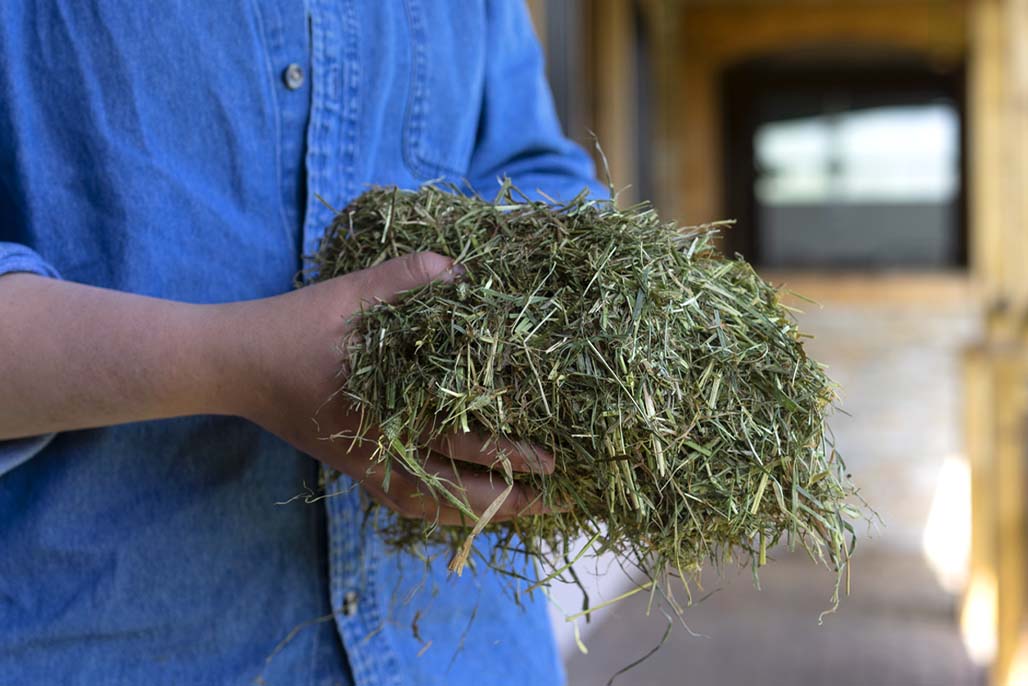
Good hay for horses should feel slightly soft and flexible, not harsh and scratchy or sharp and woody. You should be able to easily ball up a handful of hay in the palm of your bare hand without scratching your skin. If the hay scratches or pokes you, it is likely too tough and stemmy for your horse to digest easily. In addition, overly coarse hay can mean the plant matured too long before cutting, leading to lower palatability and reduced nutrition. Here are the qualities you should look for:
- Bends easily without snapping into dust
- Feels firm but not woody
- Doesn’t crumble excessively in your hands
How do I identify mold or dust in hay?
Mold and dust are often some of the first indicators that something is off with your horse forage. Knowing what to look for is critical to keeping your hay clean and your horse healthy.
Moldy hay
The first indication of mold contamination is often how the hay smells. Good hay should smell fresh and a little sweet. Moldy hay often has a musty, sour, or “basement-like” odor. Even small amounts of mold dust can irritate your horse’s respiratory system or cause serious health issues. Our biggest hay inspection tip when it comes to checking for mold? Trust your nose. You can also start training your eye to look for these subtle red flags:
- White, gray, or black fuzzy patches
- A “dusty bloom” that clings to the hay surface
- Clumped or matted sections inside the bale
- Uneven or blotchy coloration
Dusty hay
Because it can even be present in hay that looks clean, dust is a little more tricky to detect when inspecting your horse’s forage quality. But there is an easy way to test it: grab a hay flake and give it a firm shake in a sunbeam or barn light. Clean hay should not puff like an old couch cushion, so if you see a “dust fog” or particles settling on your hands or clothing, that’s your cue to keep it away from your horse. If your horse is coughing or hesitating at feeding time, that may also be a sign that dust is present.
How can I maintain good hay for my horses?
Learning to maintain your horse’s forage quality doesn’t require perfection, it just requires paying attention and learning to trust your senses. Over time, your eye gets sharper, your instincts get stronger and your confidence grows. The more consistent you are, the easier it becomes to spot what is good for your horse and what isn’t.
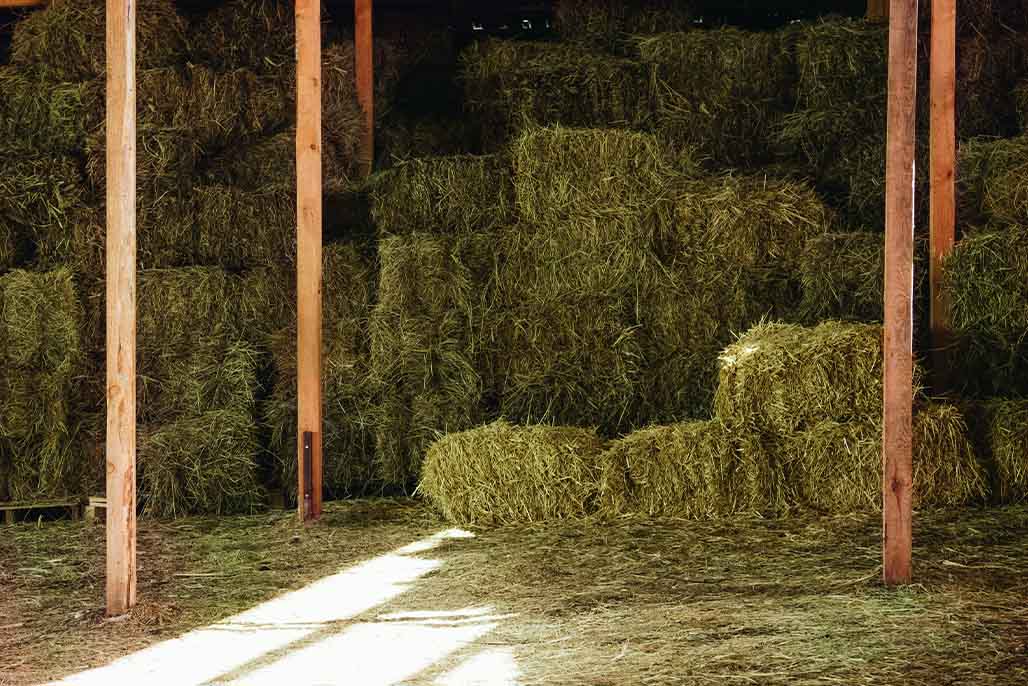
After evaluation, the best way to maintain the cleanliness and high-quality nutrient value of your hay is through proper storage. Moisture is one of the biggest threats to your horse’s forage quality, as it attracts insects as well as causes mold growth. Also, excessive heat can over dry the hay, decreasing digestibility. Always be sure store hay in a cool, dry place and follow these easy tips:
- Store off the ground to keep it clean and away from rodents and birds
- Store in a well-ventilated space to prevent heat and humidity buildup
- Avoid direct sun — UV light bleaches hay and strips nutrients over time
- Leave small gaps between stacks and walls to reduce moisture pockets
- Use older hay first — an easy rule to follow is first in, first out
- Regularly check for heat, musty smells, or dust
Ensuring quality nutrition for your horse with Triple Crown
By learning to evaluate your horse’s forage quality, you’re actively shaping their daily health outcomes. And just as importantly, you’re strengthening the bond between you and your horse. Because when your horse feels good, you feel confident in the care you’re providing.
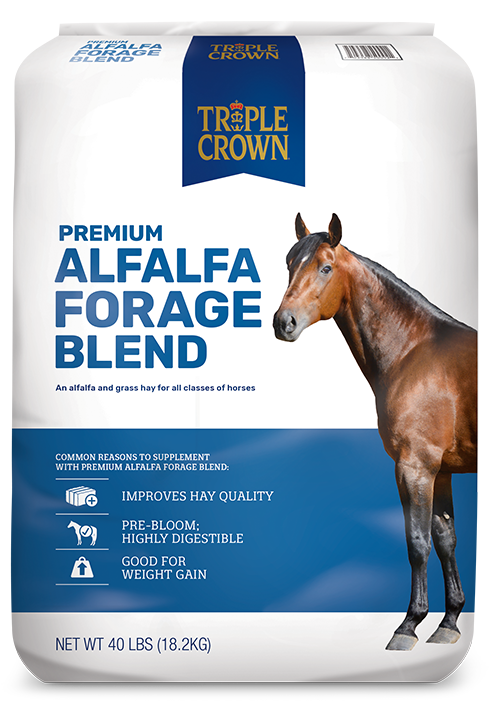
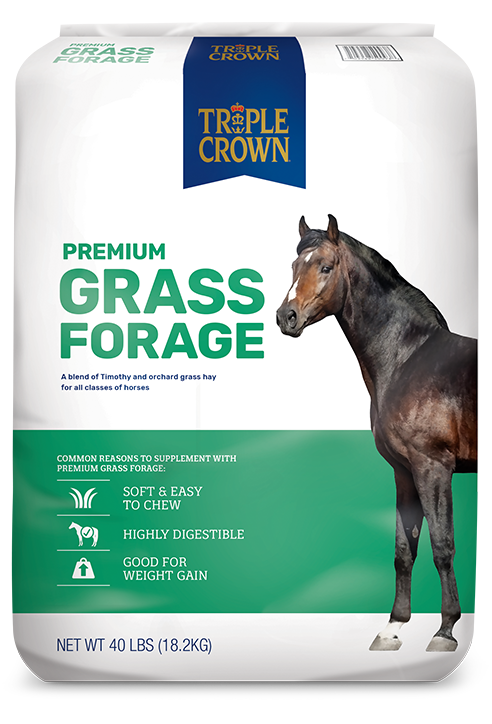
If you find yourself struggling to find a high quality forage supply, hay extenders are an easy, reliable way to supplement or replace forage in your horse’s diet. All Triple Crown chopped forage products and hay cubes act as hay extenders and can be fed as a one-to-one replacement for forage. And if you have additional questions about horse nutrition or are looking for additional hay inspection tips, our experts are here for you — get in touch with us today.


 Back to All
 Back to All Topics