Published: November 3, 2026
Print as PDF
Owning a horse is wonderful – and sometimes messy, especially when it comes to unusual waste. If you’ve noticed normal manure balls surrounded by brown watery liquid, you’re not alone. Fecal water syndrome in horses is a condition that is, yes, messy … and often confusing, because your horse may otherwise look healthy, eat well and pass mostly normal waste.
Keep reading to learn what causes fecal water syndrome, how it differs from diarrhea, and what management strategies can help.
What is fecal water syndrome in horses?
Put simply, it’s a condition where watery fluid separates from formed manure. Your horse may pass normal or nearly normal manure, but liquid runs from the anus before, during or after defecation.
Owners often notice it as:
• Wet, brown staining down the hind legs
• A dirty tail, tail dock or perineal area
• Watery splatter on stall walls or bedding
• Normal manure piles with a separate liquid component
• Skin irritation from repeated moisture and manure contact
Think of fecal water syndrome as a manure-water separation issue rather than one disease with one cause. It may involve hindgut water handling, forage digestion, stress, diet changes and individual sensitivity.
Fecal water syndrome vs diarrhea: what’s the difference?
This distinction matters because diarrhea can signal a more serious medical problem, while fecal water syndrome often occurs in horses that are otherwise stable.
With fecal water syndrome:
• Manure is usually formed or semi-formed.
• Water passes separately from the fecal balls.
• The horse may maintain normal appetite, attitude and hydration.
• The problem may be intermittent, seasonal or triggered by management changes.
With diarrhea:
• The entire manure output is loose, watery or unformed.
• The horse may pass manure more frequently.
• There may be fever, dullness, poor appetite, dehydration or colic signs.
• Possible causes include infection, inflammation, parasites, toxins, medication reactions or serious digestive upset.
In short, if the manure pile has shape but watery fluid appears around it, fecal water syndrome is more likely. If the manure itself is watery and unformed, treat it as diarrhea and contact your veterinarian promptly.
Fecal water syndrome causes
What’s behind this condition? Owners concerned about fecal water syndrome want one clear answer. In reality, several factors might contribute at the same time:
1. Forage quality or forage changes
• New hay batches, haylage, overly mature hay or inconsistent forage can affect hindgut fermentation.
• Long gaps without forage may also disturb normal gut function.
2. High starch or concentrate intake
• Large grain meals can alter hindgut conditions when starch escapes digestion in the small intestine.
• Horses that are sensitive may do better with smaller meals, lower-starch feeds or ration balancers when appropriate.
3. Stress and social pressure
• Low-ranking horses, horses bullied at feeding time or horses kept in tense herd situations may be more likely to show signs.
• Travel, stall confinement, training changes and weather-related routine disruptions can also be triggers.
4. Dental, parasite or underlying health issues
• Poor chewing, parasite burden, inflammatory bowel conditions or other digestive problems may be fecal water syndrome causes in some horses.
• Because causes can overlap, veterinary evaluation is important when signs are new, severe or persistent.
Can diet affect fecal water syndrome?
Diet can absolutely affect fecal water syndrome in horses because the hindgut depends on steady, consistent fiber. Feeding changes are one of the first places to look.
Diet can contribute when:
• Hay quality or hay type changes suddenly.
• Large concentrate meals or high-starch feeds disrupt hindgut fermentation.
• The horse goes long periods without forage.
• Pasture, haylage, chopped forage or hay pellets are introduced too quickly.
Start by simplifying the diet. Prioritize clean, consistent forage, reduce unnecessary starch and sugar, and feed smaller, more frequent meals. If weight, workload or metabolic health complicates the diet, ask your veterinarian before making major changes.
When should you call a veterinarian?
Call your veterinarian when the problem is new, worsening, persistent or paired with signs your horse is not feeling well. Fecal water syndrome is usually less urgent than diarrhea, but a vet can help rule out parasites, dental problems, inflammatory bowel disease, infectious diarrhea and other concerns.
Contact your veterinarian right away if you notice:
• Watery, unformed manure
• Fever, depression, poor appetite or weight loss
• Colic signs, bloating or repeated lying down
• Dehydration, blood, foul odor or sudden severe changes
• Persistent skin lesions or painful scalding
Even if your horse seems bright and comfortable, talk with your vet if the fecal water continues for more than a few weeks, causes skin irritation or keeps returning despite careful diet and management changes.
How can owners treat and manage the condition?
There is no single proven fecal water syndrome in horses treatment that works for every horse. Treatment and management focus on three goals: identifying triggers, improving hindgut stability and protecting the skin.
Start with these practical steps:
1. Keep forage consistent. Avoid abrupt hay changes; transition over 7–14 days when possible.
2. Offer adequate forage. Many horses do best with steady access to clean hay or pasture, unless restriction is medically needed. Triple Crown Diamond Smart Chopped Forage, Smart Pellets and Smart Cubes are options for high-quality forage, depending on your horse’s specific needs.
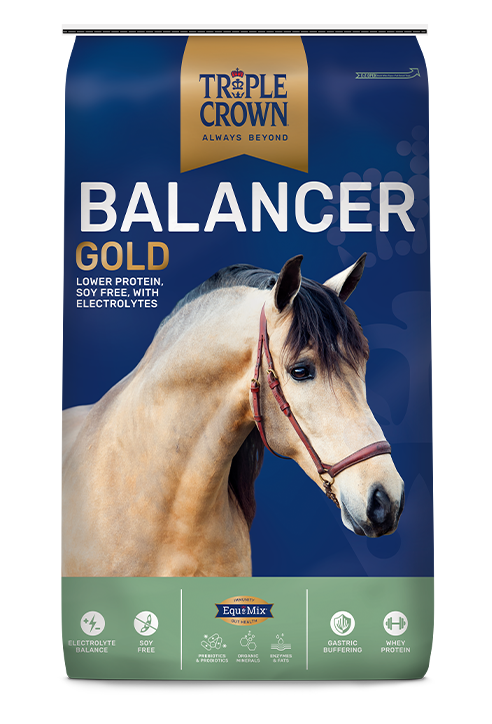
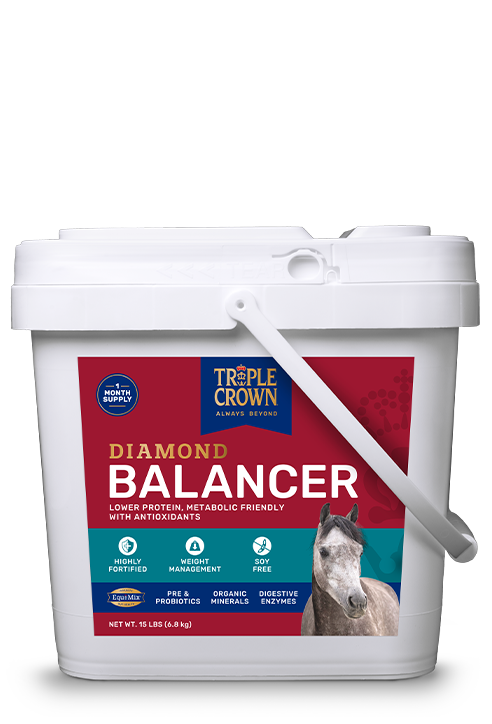
3. Review concentrates. Reduce large grain meals and look into lower-starch options. Triple Crown Low Starch is an option suitable for the entire barn. Triple Crown Balancer Gold and Triple Crown Diamond Balancer both can support unbalanced hay, pasture and grain diets.
4. Support chewing and digestion. Schedule regular dental care.
5. Check parasite control. Use fecal egg counts and a veterinarian-guided deworming plan.
6. Reduce stress. Provide enough feeding stations and space for timid horses.
7. Track patterns. Note hay source, turnout, weather, feed changes, supplements and manure quality.
8. Protect the skin. Clean gently and use a barrier cream when appropriate.
Some horses improve with chopped forage, soaked hay pellets, psyllium, salt adjustments, probiotics or prebiotics, but responses vary. Remember to introduce only one change at a time and discuss supplements or medications with your vet when you ask about how to treat fecal water syndrome.
Nutrition matters
For owners with horses experiencing fecal water syndrome, improvement is within reach: simplify the diet, stabilize forage, reduce stress, involve your veterinarian and make
changes one step at a time. We’re here to help; contact us to learn about nutrition that can best address fecal water syndrome and more for your horse.


 Back to All



 Back to All Topics