Published: September 14, 2026
Print as PDF
Yes, miniature horses are small. But feeding them takes the same careful attention you’d give a full-sized horse, sometimes more. Because minis are usually easy keepers, they can gain weight quickly on what looks like a tiny amount of hay, pasture, or feed.
Keep reading for essential information on miniature horse feeding. We’ll share what and how much to feed, common mistakes to avoid, plus best feeding practices to keep your
mini at their healthiest.
How much feed matters
How much to feed a mini horse? First, it helps to understand what a miniature horse should weigh. Most adult minis weigh150-300 lbs, with an average mini close to 200 lbs. A livestock scale is best for measuring, but a miniature-horse weight tape or a veterinarian approved measuring formula is better than estimating by eye.
1. Start with 1.5% to 2% of body weight per day. For most miniature horses at maintenance, this is the daily target for total forage or dry matter.
2. Use weight-based examples. A 200 lb miniature horse needs 3 to 4 pounds of hay or forage daily, while a 250 lb mini may need 3.75 to 5 pounds.
3. Adjust to the individual horse. These numbers are a baseline, not a permanent rule. Age, workload, metabolism, pasture access, and body condition all matter.
Body condition should guide every feeding decision. Ideally, you should be able to feel the ribs easily beneath a light covering of flesh, but not see them prominently. Watch for fat deposits along the crest of the neck, behind the shoulders, around the tailhead, or over the back. If your mini is gaining weight, reduce calories gradually, choose lower-energy forage, and increase controlled exercise if appropriate.
What’s the best diet for a mini?
For miniature horse feeding, it’s forage-first: clean grass hay or carefully managed pasture, supported by a ration balancer or vitamin/mineral supplement when needed. Good grass hay like Timothy hay, orchard grass, brome, or a similar mixed grass hay is ideal. Mature, lower-calorie hay is useful for minis that gain weight easily because it allows them to chew longer while consuming
fewer calories.
Pasture can be part of the mini horse diet, but it has to be managed. Spring grass, fall regrowth, and lush pasture can be high in sugars, and that’s a concern for minis prone to obesity or laminitis. You’ll want to limit grazing time, use a grazing muzzle when appropriate, or provide turnout on a dry lot with measured hay. Fresh, clean water and plain salt should always be available.
Do miniature horses need grain?
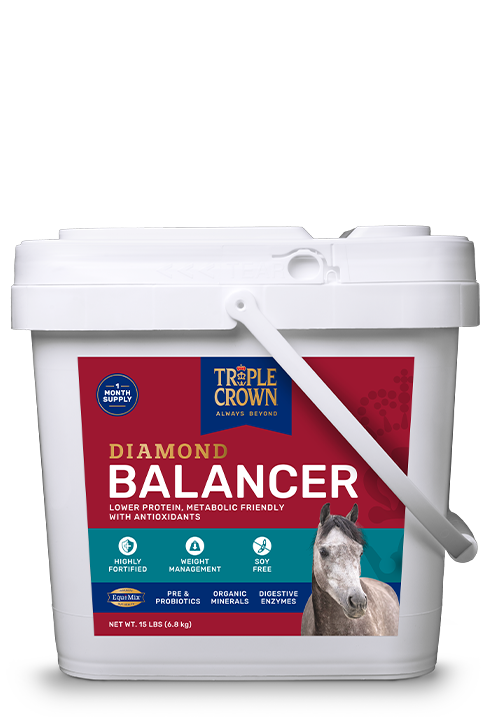
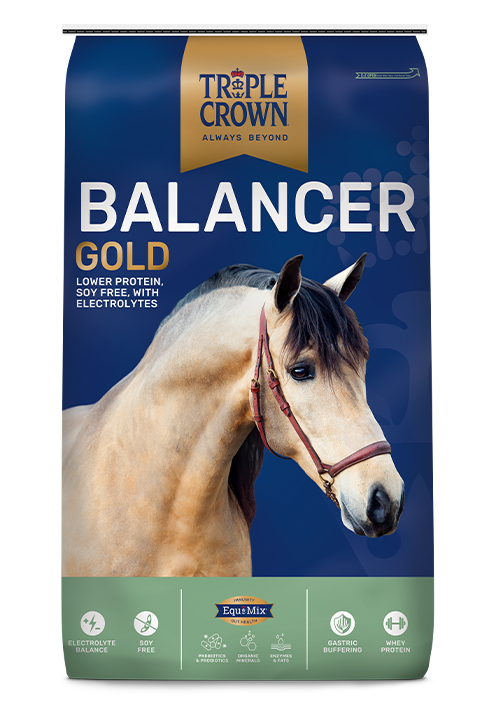
Most don’t need grain at all. If the horse is mature, healthy, not pregnant or nursing, and doing light work or no work, mini horse nutrition can be hay plus a good ration balancer. A ration balancer is fed in small amounts and is designed to provide protein, vitamins, and minerals that forage may lack. Triple Crown Balancer Gold and Triple Crown Diamond Balancer are both good ration balancers for miniature horses.
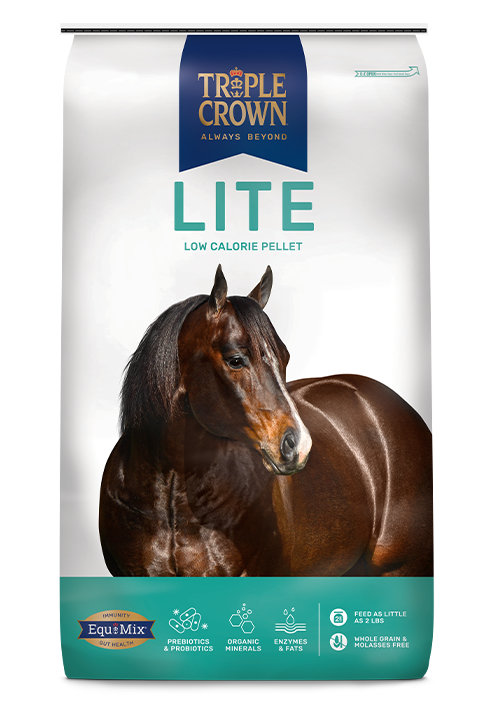
Concentrated feed might be appropriate for your mini if they’re a growing youngster, a broodmare in late pregnancy or early lactation, a senior with poor teeth, an underweight horse, or a mini in regular work. Choose a low-starch, low-sugar, low-calorie option formulated for miniature horses and ponies, like Triple Crown Lite. For even higher-fat options, feeding some Triple Crown Senior or our Safe Starch® Forage can be another way to add additional calories. Always feed by weight, not by scoop – and be sure to introduce any change in your mini horse diet gradually over 7 to 14 days.
What feed should be avoided?
• Sweet feed or molasses-heavy feeds that add unnecessary sugar.
• Large grain meals or high-starch mixes, especially for easy keepers.
• Rich alfalfa as the main forage for an overweight or idle mini horse, unless recommended by a vet or equine nutritionist.
• Extra calories that don’t solve a clear nutritional need.
• Frequent treats. Make these occasional – a small carrot or apple is usually enough for a mini. What seems like a harmless handful can add up to a big calorie load for a 200lb horse.
How miniature horse feeding differs from feeding a full-size horse
The principles are the same for miniature and full-sized horses: forage first, balanced nutrients, clean water, salt, and a feeding plan based on body weight and workload. The difference is scale and margin for error. A full-sized horse might eat 15 to 20 pounds of hay per day at maintenance, while a mini horse may need only 3 to 5 pounds. One extra flake of hay, one generous scoop of grain, or unrestricted pasture can oversupply calories fast.
Miniature horses also tend to be metabolically efficient. Many thrive on less energy than owners expect, which is why visual comparison to larger horses can be misleading. Instead of asking, “Does this look like enough feed?” ask, “Does this match the horse’s weight, body condition, and work level?”
Best practices for feeding your miniature horse
• Weigh hay and feed. Scoops and flakes vary widely, so use a scale.
• Feed small, frequent meals. Splitting hay into two or more feedings supports natural eating behavior.
• Slow intake. Small-hole hay nets or slow feeders can extend chewing time for easy keepers.
• Monitor body condition monthly. Feel through winter coats and adjust before weight gain becomes severe.
• Control pasture. Use dry lots, grazing muzzles, or limited turnout for minis at risk of weight gain.
• Balance the diet. Forage alone may lack key vitamins and minerals, so consider a ration balancer or supplement for optimal mini horse nutrition.
• Work with a pro. Ask your veterinarian or equine nutritionist for help if your mini has laminitis, insulin resistance, dental problems, pregnancy, or unexplained weight change.
Common mistakes to avoid
• Overfeeding. Feed to body weight, always. Many owners feel sorry for a mini that gets only a few pounds of hay, especially when full-sized horses get much more.
• Feeding grain out of habit. Grain should solve a nutritional or calorie need, not just be part of the routine.
• Allowing unlimited lush pasture. Fresh grass can oversupply calories and sugar.
• Using rich hay for an overweight horse; lower-calorie grass hay is a better fit.
• Measuring by scoop instead of weight. For accuracy, you have to weigh.
Overall, think small
Feeding the miniature horse well means thinking small, measuring carefully, and watching body condition closely. Focus on a forage-first diet with disciplined portion control for a comfortable, healthy mini.
If you have more questions about miniature horse feeding, talk with a Triple Crown expert.


 Back to All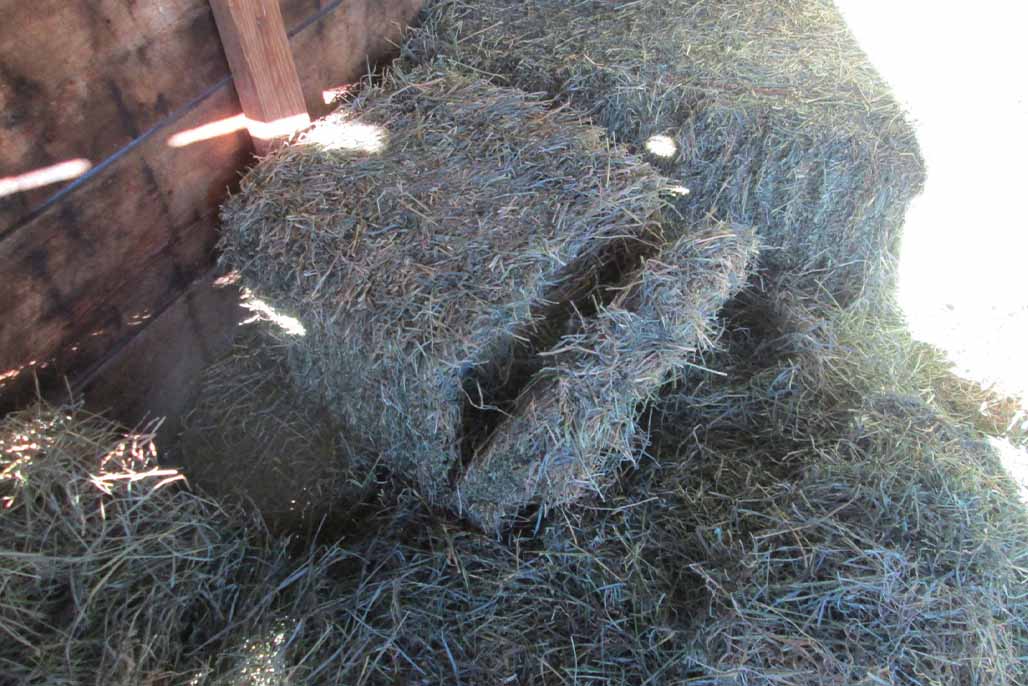
 Back to All Topics