Published: August 18, 2026
Print as PDF
Iron is a nutrient horses need, but it can be a little confusing for horse owners. Iron moves oxygen through the horse’s body, supports muscle function, and helps enzymes involved in energy production. But more iron isn’t always better.
In this article, we’ll break down what you need to know about iron for horses, the sources, signs of iron deficiency and excess iron, and what you can do to keep iron at healthy levels for your horse.
What does iron do for horses?
The easiest way to think about iron is as part of a horse’s oxygen-delivery system. It’s best known for its role in hemoglobin, the protein in red blood cells that carries oxygen from the lungs to the tissues. It’s also part of myoglobin, which helps muscles store and use oxygen during work. Beyond oxygen transport, iron contributes to energy metabolism, immune function, and normal cellular processes.
For performance horses, growing horses, broodmares, and lactating mares, adequate iron matters because oxygen delivery and tissue health are closely tied to stamina, recovery, and overall vitality.
Common sources of iron for horses
The good news is, horses already get plenty of iron from the things they consume every day:
- Forage
Hay and pasture are usually the largest sources of iron in a horse’s diet. (Note, while horses can take in large amounts of iron from these natural sources, not all of it is
absorbed, or bioavailable to the horse.)
2. Soil
Dirt on hay, grazing close to the ground, or feeding from the ground can increase iron intake.
3. Water
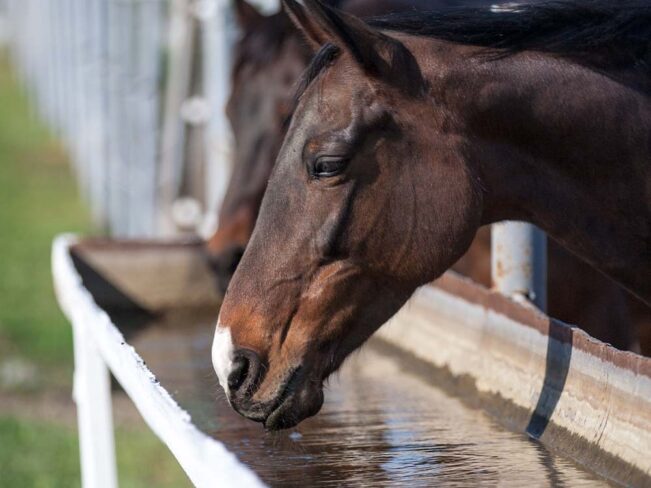
Well water or high-mineral water may contribute meaningful amounts of iron.
4. Feeds and grains
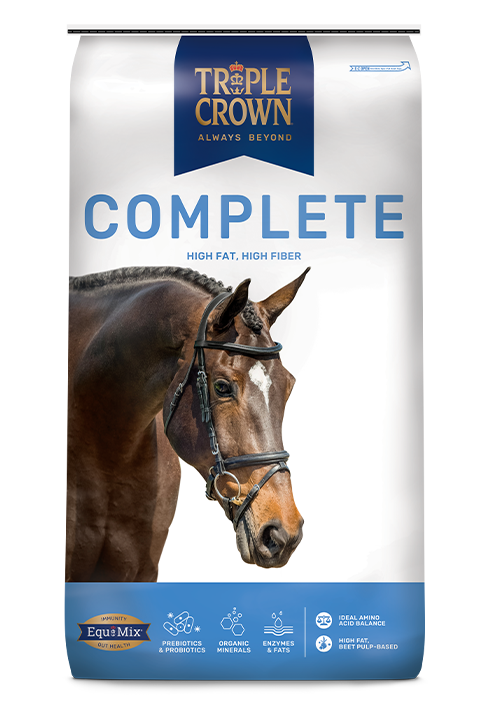
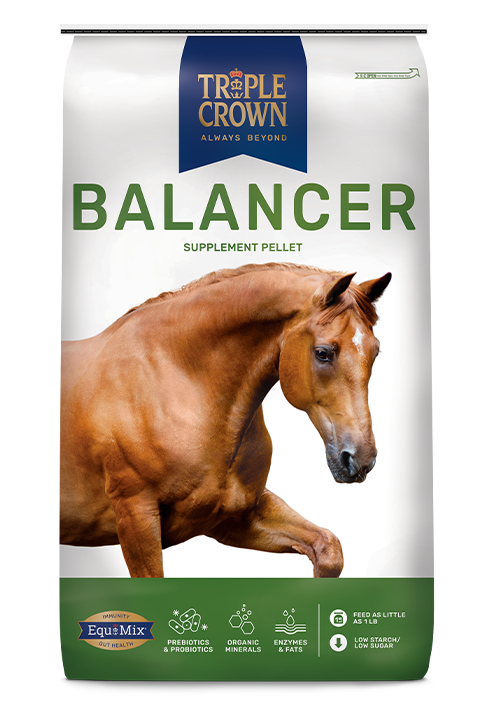
Minerals in horse feed include iron. Many products contain iron as part of a complete feed or fortified balancer, focusing on ration balancing rather than iron replacement. It’s good to know, Triple Crown feeds contain no added iron; only the iron occurring naturally in the formula ingredients.
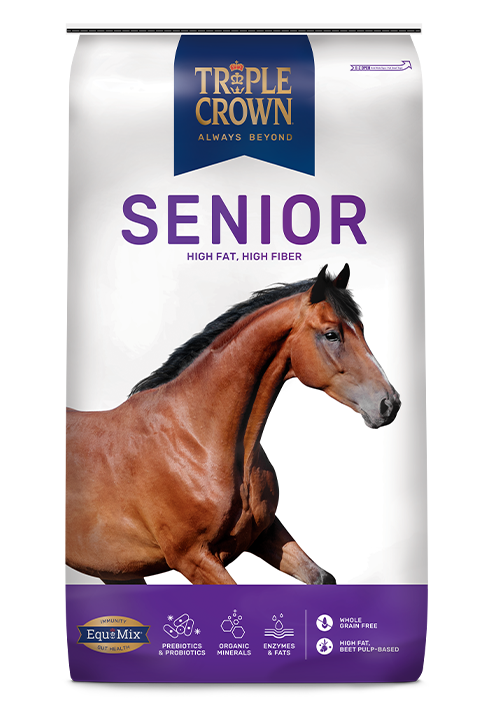
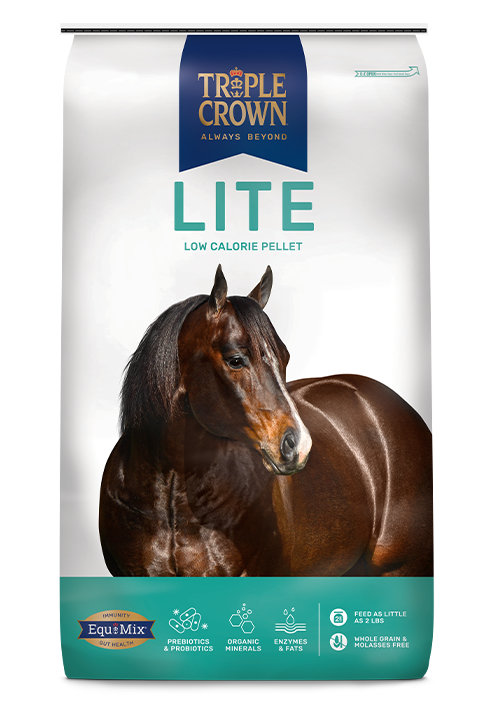
Triple Crown Complete, Triple Crown Lite, Triple Crown Balancer and Triple Crown Senior all offer different amounts of iron to be considered for different horse’s needs. You can find more information on our Feed Selector.
How much iron do horses need?
A mature 1,100 lb horse at maintenance needs about 400 mg of iron per day.
• Needs may be higher during certain life stages, like lactation, or with heavier work.
• Many horses consume more than the minimum requirement through hay alone.
• The most accurate way to evaluate intake is to test hay, review labels for minerals in horse feed, and consider water sources. You may want to have water tested if excess iron is suspected.
How iron affects performance
Iron matters for performance, but it’s not a shortcut to more energy. It supports performance because it’s central to oxygen transport and muscle oxygen use. Adequate iron helps red blood cells deliver oxygen and helps muscles use that oxygen during exercise.
But excess iron in horses doesn’t automatically create more speed, stamina, or power. If a performance horse is tiring easily, losing condition, or recovering poorly, you should first evaluate the full diet, workload, hydration, respiratory and gut health, and bloodwork before reaching for an iron supplement.
Can a horse be iron deficient?
The short answer is yes, horses can be iron deficient — but it’s very uncommon. True dietary horse iron deficiency is rare because forage and feed ingredients typically provide adequate iron.
Potential signs of iron deficiency include:
• Fatigue, weakness, or reduced stamina
• Poor performance or slower recovery after exercise
• Pale gums or pale mucous membranes
• A dull, lethargic attitude
When a horse is anemic, the cause is often not a simple lack of iron in the diet. Because these signs aren’t exclusive to iron deficiency, veterinary testing is important to determine an actual need for more iron, or if there are other health issues.
Do horses need iron supplements?
Most horses do not need supplemental iron. Iron is naturally abundant in what they consume every day, so deficiency from diet alone is uncommon. Supplementation is appropriate only when bloodwork confirms anemia or poor iron status and a vet identifies the underlying cause. Adding iron “just in case” can make a balanced ration less balanced, especially if copper and zinc are already marginal.
The risk of excess iron in horses
This is where iron can get tricky: the problem is often too much, not too little. Excess iron in horses is a growing concern because iron is abundant in many equine diets and the body has limited ways to remove large surpluses. High iron intake can contribute to oxidative stress, liver burden, and interference with the absorption or utilization of other trace minerals, especially copper and zinc. High iron diets are also discussed in relation to metabolic health, including insulin dysregulation and laminitis risk in susceptible horses.
While horses can take in excess iron from their diets, the maximum tolerable concentration is 5,000 mg of iron per day for the average 1,100 lb horse.
The takeaway is clear: horse owners should avoid unnecessary iron supplementation. Relying on iron and trace minerals in a complete feed or fortified balancer is a more effective way to keep iron at appropriate levels for your horse.
Balance is key
Iron is essential, but it’s rarely missing from the average horse’s diet. Before adding more, it’s smarter to test forage, review feed labels for balanced iron alongside other trace
minerals, and look at water quality. If you suspect an iron deficiency, consult a veterinarian to determine whether iron supplementation is a good idea for your horse.
We’re here to help; call us if you have additional questions about iron or other horse nutrition needs.


 Back to All

 Back to All Topics