Published: July 24, 2026
Print as PDF
Not all horse owners realize, ulcers are a common digestive health issue. And they can affect any horse. Ulcers in horses occur when acid damages the lining of the stomach or
nearby digestive tissues. Because equine gastric ulcer symptoms can be subtle at first, it’s important to know what to look for and what to do before the problem – and your horse’s discomfort – grows.
This article explains what causes horse ulcers, how to recognize possible symptoms, ulcer treatments, and how diet can help.
What causes ulcers in horses?
Horses are designed to graze for hours a day, which means their stomachs produce acid continuously. When a horse goes long periods without forage, that acid has less feed and saliva to buffer it. Over time, it can irritate the more sensitive upper portion of the horse’s stomach, causing ulcers.
Common risk factors for horse ulcers include intermittent feeding, high-grain or high-starch diets, limited turnout, stall confinement, travel, competition stress, and illness. Ulcers can even be caused by some medications, such as nonsteroidal anti-inflammatory drugs when used heavily or for extended periods.
Exercise can play a role, too. During hard work, acidic stomach contents can splash into the upper stomach, where the lining has less natural protection. It’s one reason ulcers are an issue for performance horses.
What are the symptoms?
It’s not easy to see ulcer signs in horses – some show almost none. When equine gastric ulcer symptoms do show up, they might look like behavior problems, training resistance, appetite changes, or just general discomfort rather than an obvious stomach issue. Horse owners should pay attention to:
- Poor appetite or leaving feed behind
- Weight loss or difficulty maintaining body condition
- Dull coat or overall poor condition
- Girthiness, irritability, or sensitivity when saddled
- Reduced performance or reluctance to train
- Behavior changes, including resistance, crankiness, or anxiety-like responses
- Low-grade or recurring colic signs
- Teeth grinding, especially in foals
- Lying down more than usual or appearing uncomfortable after meals
Because these signs can overlap with other health problems, a vet should evaluate any horse with ongoing appetite changes, colic signs, unexplained weight loss, or a decline in performance.
How are ulcers in horses treated?
The most reliable way to diagnose gastric ulcers is gastroscopy, which lets the veterinarian view the stomach lining and see the location and severity of any lesions. This matters because squamous and glandular ulcers may require different treatment strategies.
If ulcers are confirmed by a veterinarian, they’ll direct treatment that typically includes medication to reduce stomach acid and create an environment that supports healing. Omeprazole is the most commonly used; medication, although some horses may also require sucrafalfate or other therapies. Length of ulcer treatment depends on the type and severity, the horse’s response, and whether risk factors are corrected.
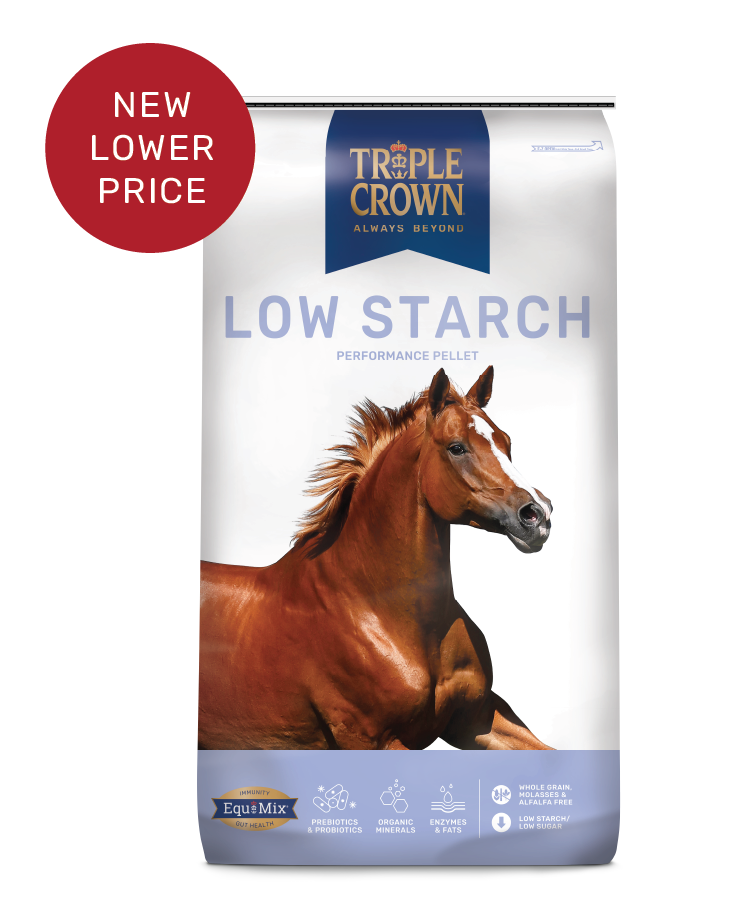
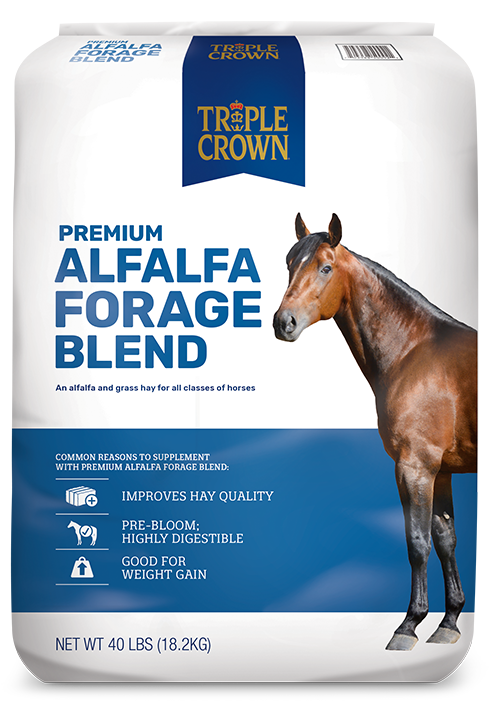
Medication alone may not be enough if the same feeding, training, travel, or stress-related triggers continue. Horse owners need a complete ulcer treatment plan including management changes, more consistent forage access, reduced starch intake, turnout when possible, and strategies to minimize long periods with an empty stomach. You can use the Feed Selector Tool to find products that can help reduce your horse’s ulcer risk, like Triple Crown Low Starch, plus options formulated to help support horses with ulcers, including Triple Crown Senior Gold and Triple Crown Diamond Senior.
Diet helps prevent equine ulcers
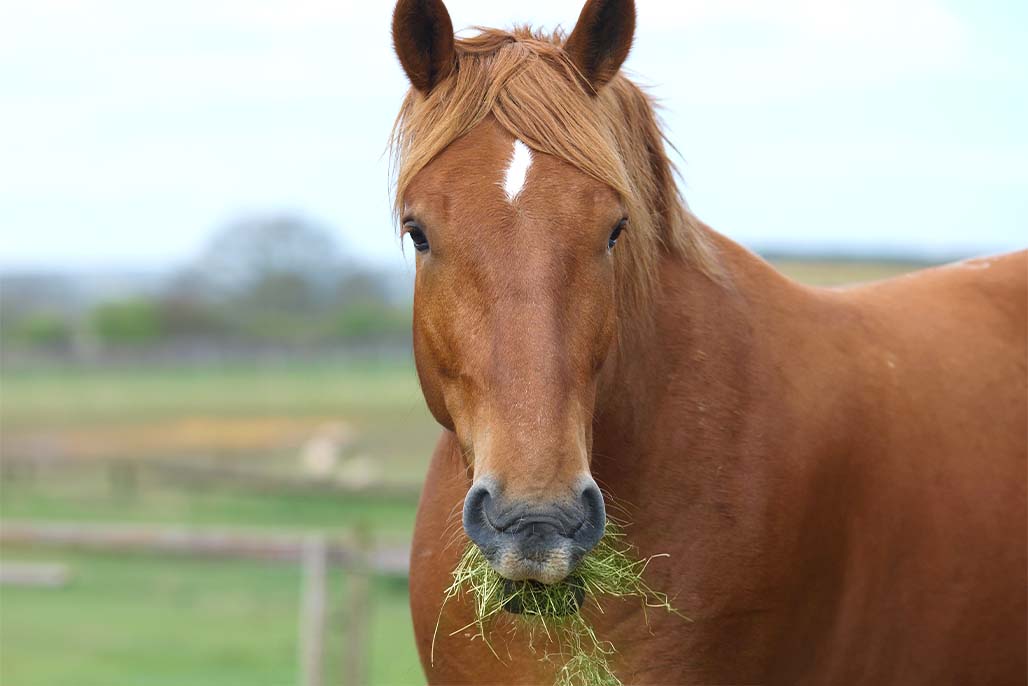
Key to ulcer prevention is a forage-first diet. Forage encourages chewing, which increases saliva production. Saliva helps buffer stomach acid, while steady forage intake helps keep the stomach from sitting empty for long periods.
- Provide frequent or continuous access to hay, pasture, or another appropriate forage source, such as Triple Crown Forages.
- Avoid long gaps between meals, especially overnight or before exercise.
- Reduce large grain meals and choose lower-starch options.
- Feed smaller, more frequent meals.
- Offer forage before riding, hauling, or stressful events.
- Consider alfalfa or mixed forage when suitable, because its calcium and protein content may help support buffering.
- Maintain clean water access.
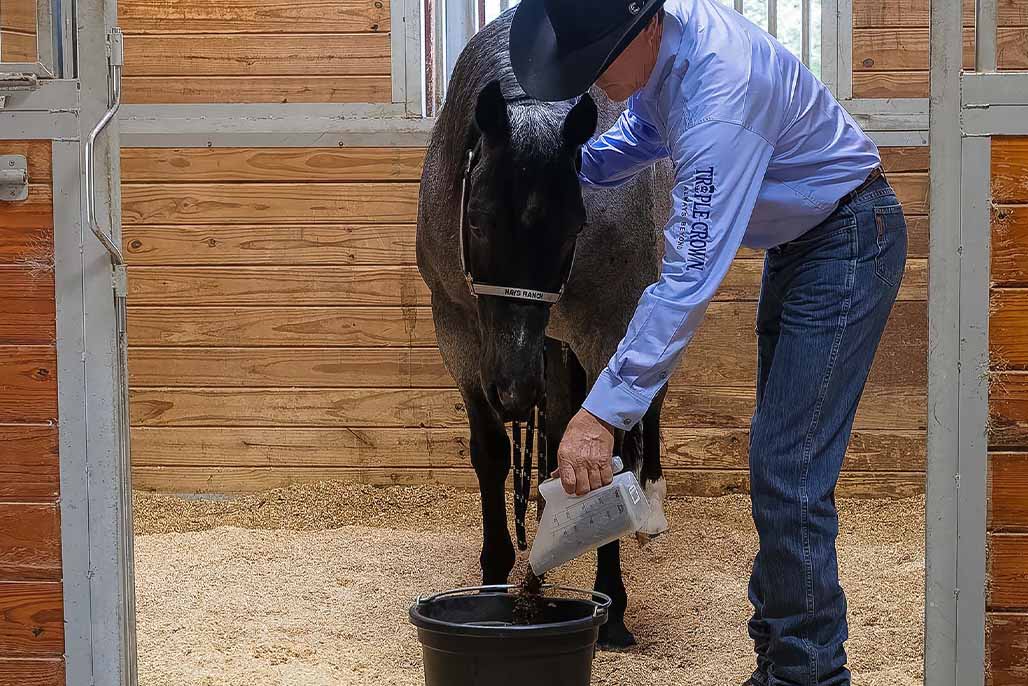
Feeding horses with ulcers requires individually tailored diets, especially for easy keepers, metabolic horses, senior horses, horses with dental issues, or horses in heavy work. If you confirm ulcers in your horse, you’ll want to work with a vet or nutrition professional to make a plan that supports ulcer heating and meets your horse’s overall nutritional needs.
Support your horse’s digestive health
If you think your horse is experiencing gastric ulcer symptoms:
- Start by contacting your veterinarian for diagnosis and treatment guidance.
- Review your horse’s daily routine, forage access, grain intake, turnout, and stress triggers.
- Explore forage-first nutrition options for feeding horses with ulcers, and veterinarian-recommended ulcer support medications.
Remember, horse ulcers are common and are closely tied to feeding, exercise, stress and stomach acid exposure. With the right plan, you can offer immediate help for ulcers and support your horse’s long-term digestive health.
Contact us today to learn more about equine ulcers or other digestive health concerns; our experts are here to help.


 Back to All


 Back to All Topics